March 25, 2026
“Spiderweb” – a legendary operation of the Ukrainian special services
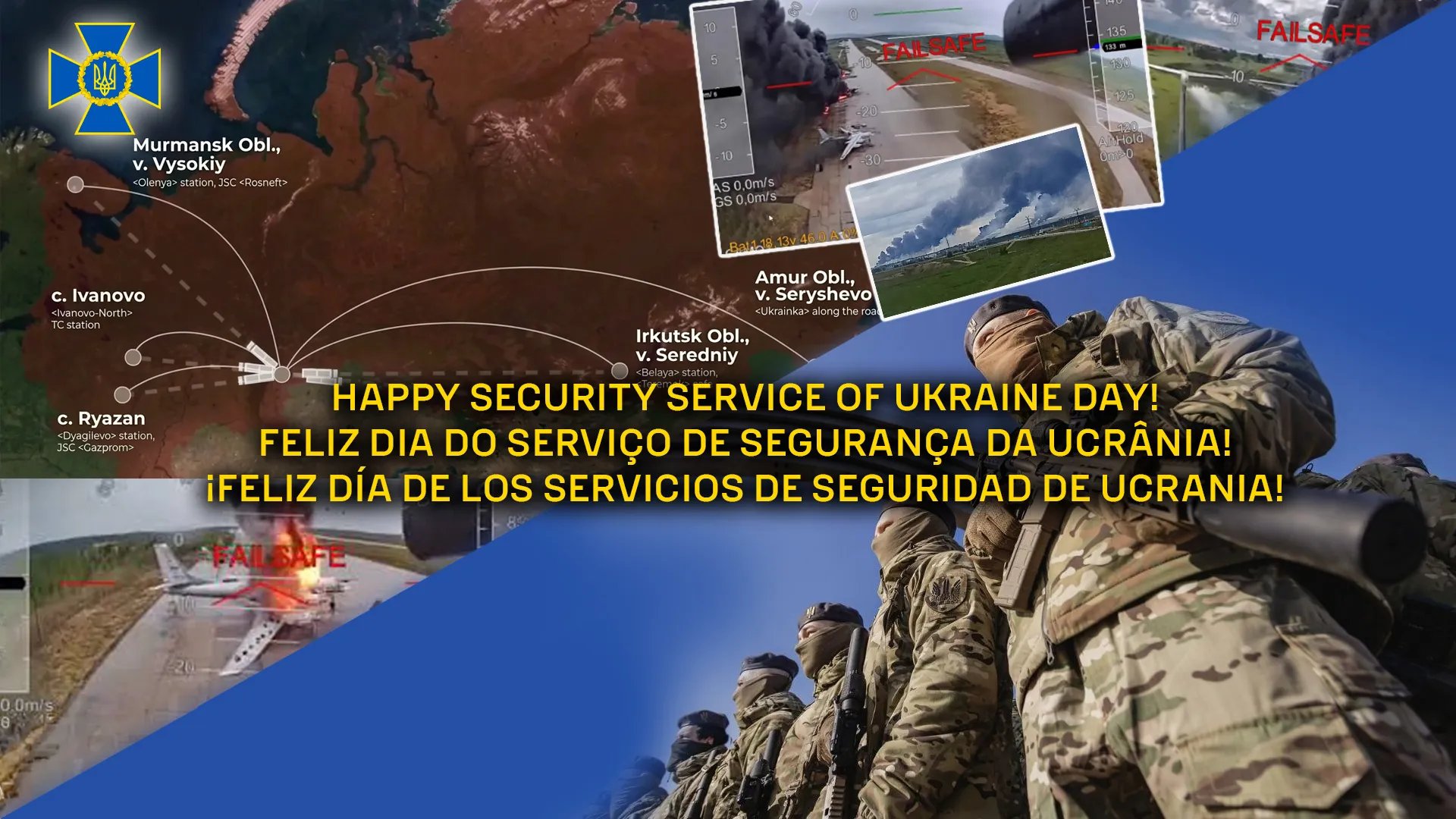
On March 25, employees of the Security Service of Ukraine (Ukrainian abbreviation SBU) celebrate their professional holiday. From the first days of the full-scale russian invasion, employees of the Ukrainian special services, like other defenders, stood up to defend the homeland. They identified and destroyed enemy agents, and soon transferred the war to the territory of the aggressor. Units of long-range drones of the SBU inflict devastating blows on military, military-industrial and oil refining facilities in the deep russian rear.
The most resonant operation of the SBU was Operation “Spiderweb” – a simultaneous impression of several dozen russian military aircraft. On June 1, 2025, four russian military airfields located in the deep rear, hundreds and even thousands of kilometers from the line of combat contact, were simultaneously attacked. The attack was carried out using remotely controlled drones, which were able to be delivered to enemy targets unnoticed.
The preparation of the special operation took place in conditions of maximum secrecy for almost a year and a half. First, the SBU implemented a complex logistical operation to bring hundreds of drones and eight launch cabins disguised as modular wooden houses to russian territory. The cabins were equipped with solar panels and batteries, and the drones with communication equipment, which made it possible to control them from the territory of Ukraine. The cargo was transported across the border using corrupt loopholes in russian customs.
The operation was coordinated in enemy territory by a married couple. Being from Ukraine, they had moved to russia a long time ago. Fluent in russian and with russian passports, they did not arouse suspicion. In one russian city, they created a logistics company, equipped a warehouse, hired drivers and quietly prepared the launch of the “Spiderweb”.
At the end of May, the trucks set off on different routes across russia. The drivers had no idea what they were carrying. And on June 1, the roofs of the cabs were opened remotely, and more than a hundred drones simultaneously rose into the air and struck four russian airfields. In an hour, operators from Ukraine were able to destroy or damage 41 russian military aircraft. In total, a third of russia’s strategic cruise missile carriers were hit. In addition, a warehouse of cruise missiles that were being prepared for launch at Ukrainian cities was destroyed at one of the airfields. The estimated value of the equipment hit as a result of Operation Spiderweb exceeds $7 billion.
After the attack, russian security forces put the Ukrainian agents’ spouses on the wanted list – but it was too late. They left Russia a few days before the end of the operation.
“In accordance with the laws and customs of war, we have worked out absolutely legitimate targets – military airfields and aircraft that bomb our peaceful cities,” the SBU leadership emphasized at the time.
Military experts from different countries called this Ukrainian operation “the aviation Pearl Harbor”, comparing it with the devastating Japanese attack on the American fleet in 1941 or even with the legendary Trojan Horse. Unique in its concept and implementation, Operation “Spiderweb” will certainly be included in the textbooks of military history and the work of special services.
President of Ukraine Volodymyr Zelenskyy congratulated the employees of the Security Service of Ukraine on their professional holiday and noted that Ukrainians can be quite deservedly proud of their Security Service - truly combative, truly patriotic, truly effective.
 Application accepted!
 Application not accepted