July 15, 2026
Ukrainian drones set new records for range and accuracy
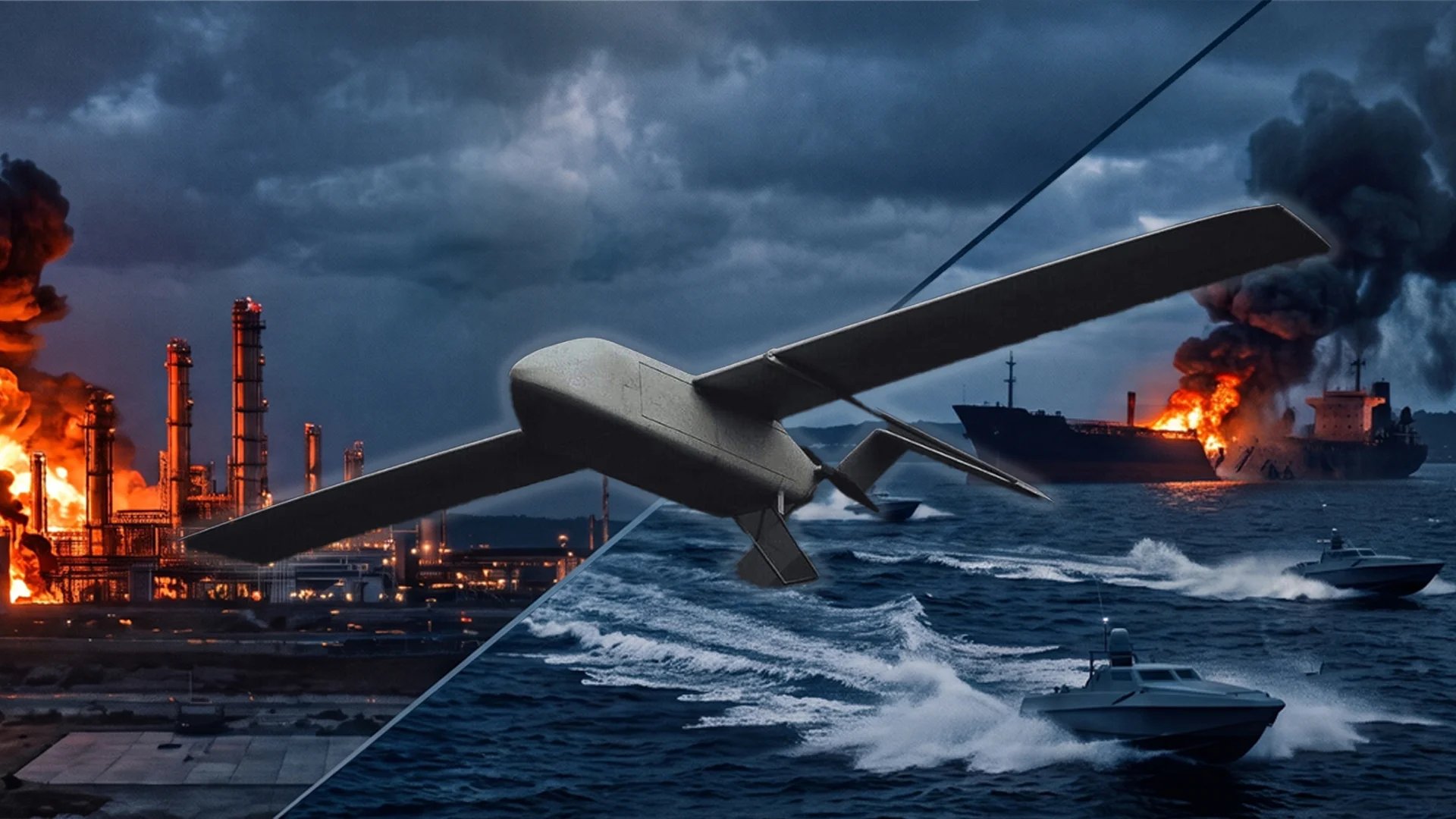
Ukrainian long-range drones hit russia’s largest oil refinery. This facility is located in the city of Omsk, 2,500 km from the Ukrainian border. This was achieved thanks to the use of upgraded FP-1 strike drones. Their flight to the target lasted about 12 hours. The first FP-1 model, introduced last summer, had a range of 1,600 km. Now, according to the developers, the upgraded model can cover a distance of up to 3,400 km.
“We have completely destroyed the very idea that Russia has a strategic rear,” Ukrainian President Volodymyr Zelensky said at the NATO Summit.
Ukrainian long-range drones also hit one of Russia’s largest oil refineries in the city of Salavat, located 1,400 km from the Ukrainian border. Oil refineries and military facilities are burning throughout russia. The only major russian oil refinery that Ukrainian drones have not yet reached is in the city of Angarsk, more than 4,400 km from the Ukrainian border.
The fuel crisis in russia is becoming increasingly serious. In exhausting, hours-long queues for gasoline, russians are increasingly fighting among themselves and voicing growing criticism of their government. These kilometre-long queues are visible even from space.
Before its full-scale invasion of Ukraine in 2022, Russia earned billions of dollars from gasoline exports. Now the russian ruler cannot provide gasoline to his subjects.
Naval russia’s fiasco
Ukraine has launched a successful operation to destroy russian maritime logistics in the Sea of Azov and the Black Sea.
After drone strikes paralyzed land transport links with the occupied Ukrainian peninsula of Crimea, the russians intensified supplies by sea but almost immediately suffered heavy losses. The russians suffered particularly heavy losses in the shallow Sea of Azov, where they used many small-capacity tankers. Here, almost every night, the russians lose dozens of vessels of various classes—not only tankers, but also cargo ships, ferries and tugboats.
Meanwhile, in the Black Sea, Ukrainian naval drones successfully attacked a large russian tanker and a warship.
Crimea requires about 70 thousand tonnes of fuel per month. In just one week, Ukrainians attacked and disabled russian tankers in the Sea of Azov alone with a combined carrying capacity of twice that amount of fuel. The focus of Ukrainian drone strikes then shifted to the Black Sea, where they successfully attacked 20 ships in one night.
In total, over the course of 10 days, more than 130 russian vessels of various types and sizes were hit. Western military observers write that the russians have never experienced such a catastrophic defeat at sea. The logistical lockdown that the Ukrainian military promised to impose on the russian occupiers is becoming increasingly evident.
Anti-ballistic coalition to protect Europe
Ukraine and nine European NATO member states (Great Britain, Germany, France, Denmark, Sweden, the Netherlands, Italy, Norway and Spain) signed a joint declaration on the creation of the Integrated Missile Defense Coalition on July 13.
The document notes that the decision was made against the backdrop of the growing threat posed by ballistic missiles. Therefore, the coalition members plan to strengthen missile defence. To do this, they are pooling the capabilities of their defense industries, scientific research expertise and combat experience to jointly develop new means of intercepting missiles.
“We recognize Ukraine’s unique experience gained while defending itself against russia’s war of aggression,” the declaration says.
“The more capabilities Ukraine has to shoot down russian ballistic missiles, the higher the likelihood that putin will sit down at the negotiating table, because his last argument in this war will no longer work,” the Ukrainian president said.
The russia is running out of offensive potential
The enemy tried to launch a large-scale offensive, but failed to achieve any of its objectives, despite an almost twofold advantage in personnel and equipment. Whereas the russian army previously conducted active offensive operations in 13 operational sectors, now that number has fallen to six or seven. This was stated by the Commander-in-Chief of the Armed Forces of Ukraine, General Oleksandr Syrsky, while summarizing the results of the first half of 2026.
Currently, the ratio of Ukrainian assault operations to enemy operations is approximately 40:60. Thanks to the active actions of the Defense Forces of Ukraine in the first half of 2026, the pace of russian advances has more than halved. Average by russian monthly losses in killed and wounded amount to about 32 thousand servicemen.
In terms of the pace of advance, the two sides have almost reached parity. There is a steady trend towards an increasing ratio of territory liberated by Ukraine compared with territory captured by the enemy.
The Ukrainian army has gained unique experience in modern warfare. Ukrainian soldiers are calling on foreign volunteers to join their ranks and are ready to share their cutting-edge combat experience.
 Application accepted!
 Application not accepted