July 1, 2026
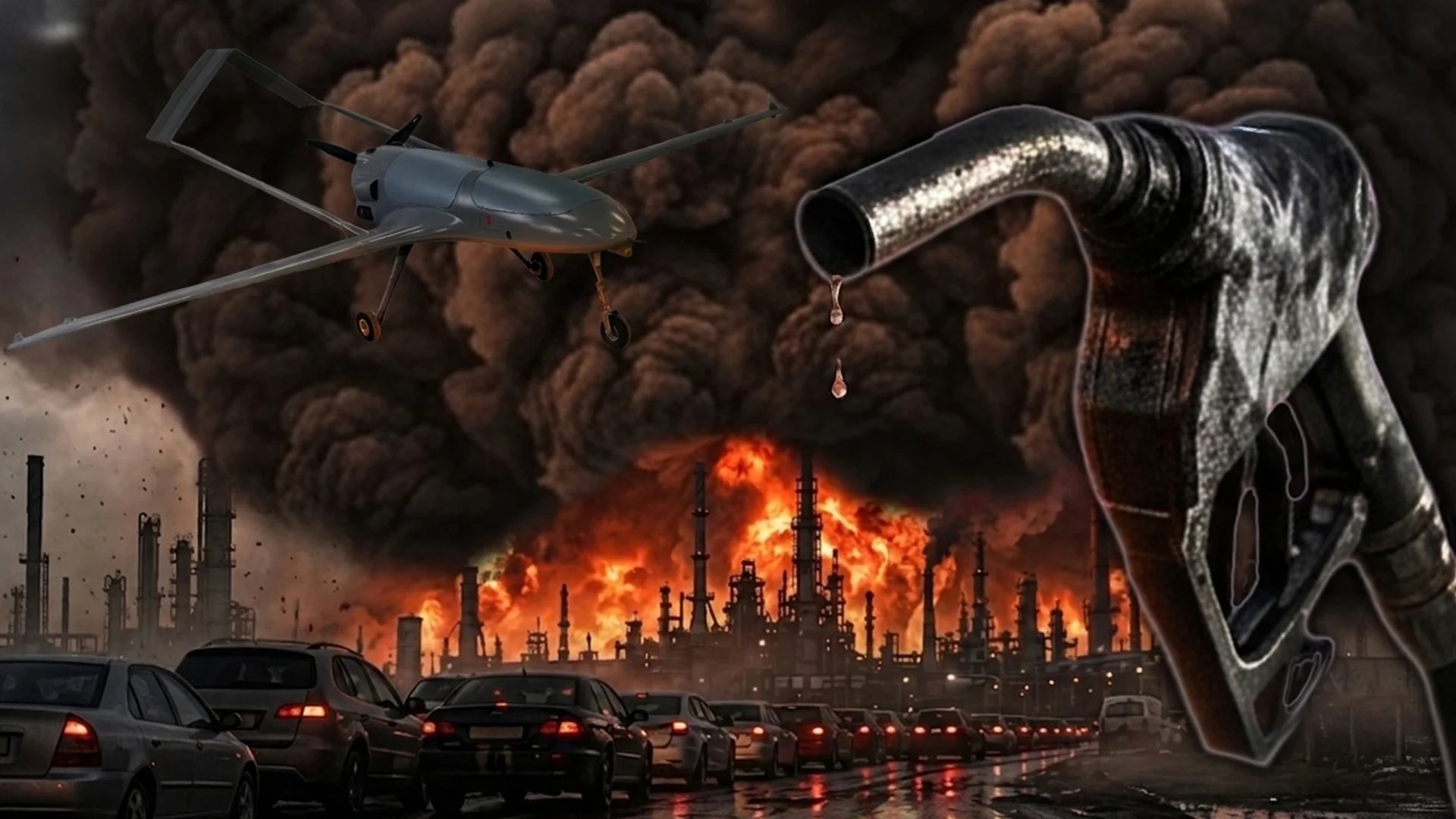
Ukraine steps up attacks, russia faces a gasoline crisis
In the second half of June, Ukraine significantly stepped up attacks on russian military, oil refining, and logistics infrastructure. The most notable result of the Ukrainian attacks was a large-scale gasoline crisis that swept across russia.
Ukrainian drones continue to systematically destroy russia's oil refining industry. They have struck facilities located more than a thousand kilometers from the Ukrainian border.
On June 20, Ukrainian drones attacked an oil refinery in Tyumen, 2,000 km from the Ukrainian border. On June 24, they struck a gas processing plant in Orenburg, the largest gas chemical complex in the world, about 1,200 km from the Ukrainian border. On June 25, they attacked an oil refinery in Ufa, about 1,400 km from the Ukrainian border.
Of the ten largest russian oil refineries, only two were not attacked, as they are located too far from Ukraine — more than 2,800 km away.
As a result of these attacks, there are almost no regions left in russia that have not been affected by the fuel crisis. Moreover, it is felt most acutely where Ukrainian drones have not reached. Fuel is simply being diverted from those regions for the russian army and for moscow. For example, in the Irkutsk region (more than 4,500 km from the Ukrainian border), drivers have to wait in line at gas stations for up to 18 hours. And in Transbaikalia, which is even further east from the Ukrainian border, gas stations sell no more than 15 liters of fuel per customer. Fuel prices have risen sharply throughout russia.
At the same time, russian ruler putin assures his subjects that “the situation with gasoline is not critical.”
Ukrainian President Volodymyr Zelensky noted in this regard: “putin can say as much as he wants on TV that he supposedly controls everything, that there is gasoline. But the russians themselves, standing in the queues for gasoline in different regions of russia, can really see that this ‘three-day war’ of theirs has been going on for five years, so much so that even the oil state, the ‘gas station,’ as russia was called, is now facing a gasoline shortage.”
The war is coming home
Starting on June 16, Ukrainian drones carried out several massive strikes on moscow. They managed to break through the multi-layered air defenses of the russian capital. Among other things, they destroyed an oil refinery in moscow, which played a major role in supplying the russian capital with gasoline. According to experts, restoring the facility will takeat least until the end of 2026. Gasoline sales at moscow gas stations were limited to 30 liters per car.
In addition, near moscow, drones twice hit the Dubna space communications center. According to President Zelensky, “this is a special satellite communications facility that is used, in particular, for reconnaissance and for coordinating the activities of the russian occupation contingent in Ukraine.”
No less important is the symbolic significance of the strike on moscow. Thus, the war has returned home — to where it was conceived.
Separately, it is necessary to mention Ukrainian missile strikes on Russian factories that produce military equipment. On June 22, missiles hit an electronics plant in Voronezh, which produced parts for missiles and air defense systems. On June 27, a missile strike was carried out on a plant in Volgograd, which produces artillery systems and missile launchers.
The main trophy has become the main problem
The enemy infrastructure on the occupied Crimean Peninsula has suffered particularly devastating damage.
During the second half of June, several railway bridges were destroyed there, as well as repair equipment that had been brought in to restore them. On June 21, Ukrainian drones attacked a ferry crossing across the Kerch Strait. Oil terminals and air defense positions were also destroyed throughout the peninsula. On June 24, drones hit a power plant near Sevastopol — until recently, the main russian naval base in the Black Sea.
As a result, the sale of gasoline to the civilian population has completely stopped on the peninsula. Whereas millions of tourists used to visit the peninsula's resorts during the summer season, now there are almost no people wishing to vacation in Crimea. On June 26, the occupation authorities introduced a state of emergency in Crimea for an indefinite period.
Twelve years ago, russian aggression against Ukraine began with the occupation and annexation of Crimea. Now the peninsula has become the biggest problem for russia and for its inept ruler himself.
 Application accepted!
 Application not accepted